Pluvio: Rain Gauge & Totals
Virtual Rainfall Log & Alerts
How much rain fell where it matters to you: the hayfield, the lawn, the job site across town. Pluvio reads it for you. No gauge to empty, no account to make.
Every morning at 7: how much rain fell at each of your places, estimated from NOAA radar and rain gauges. Two places free for good, no account.
Core Features
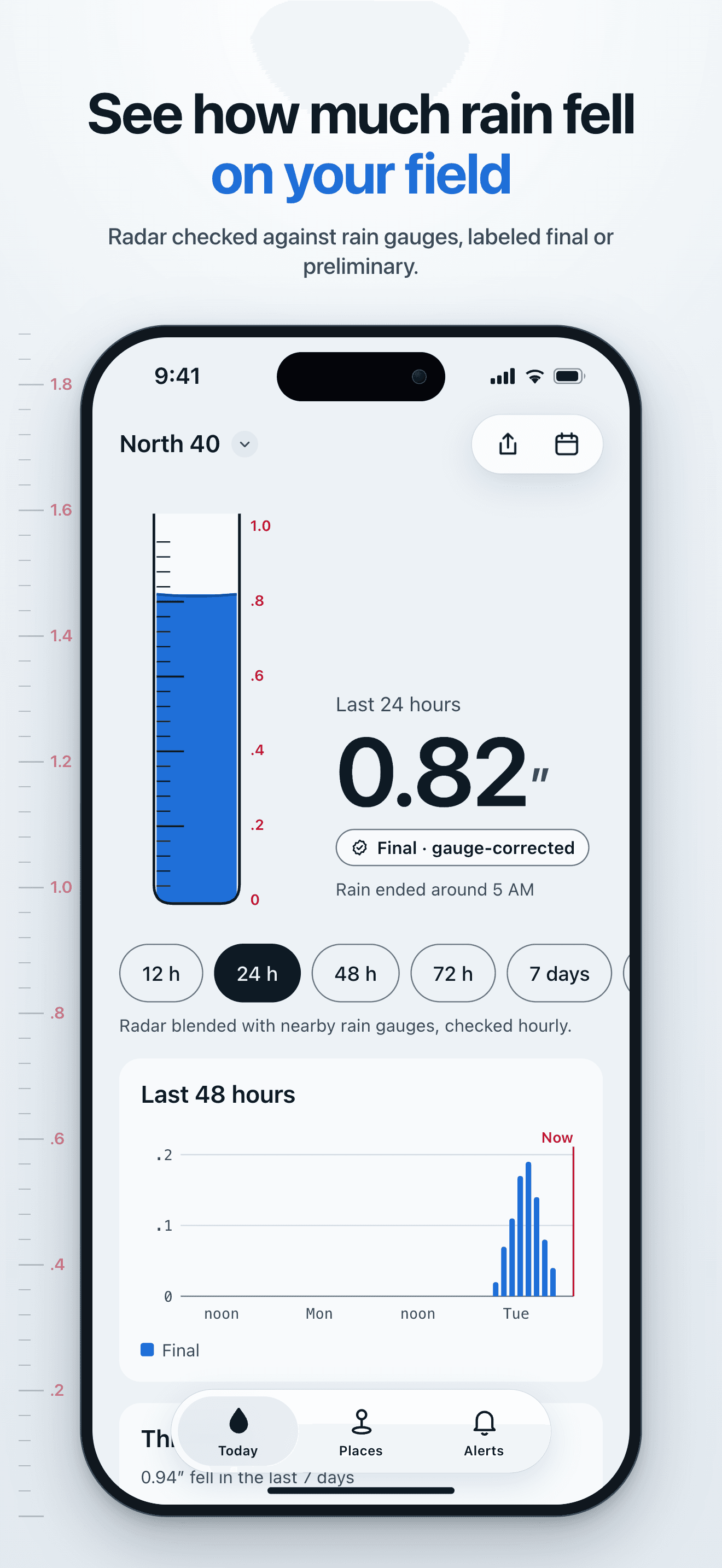
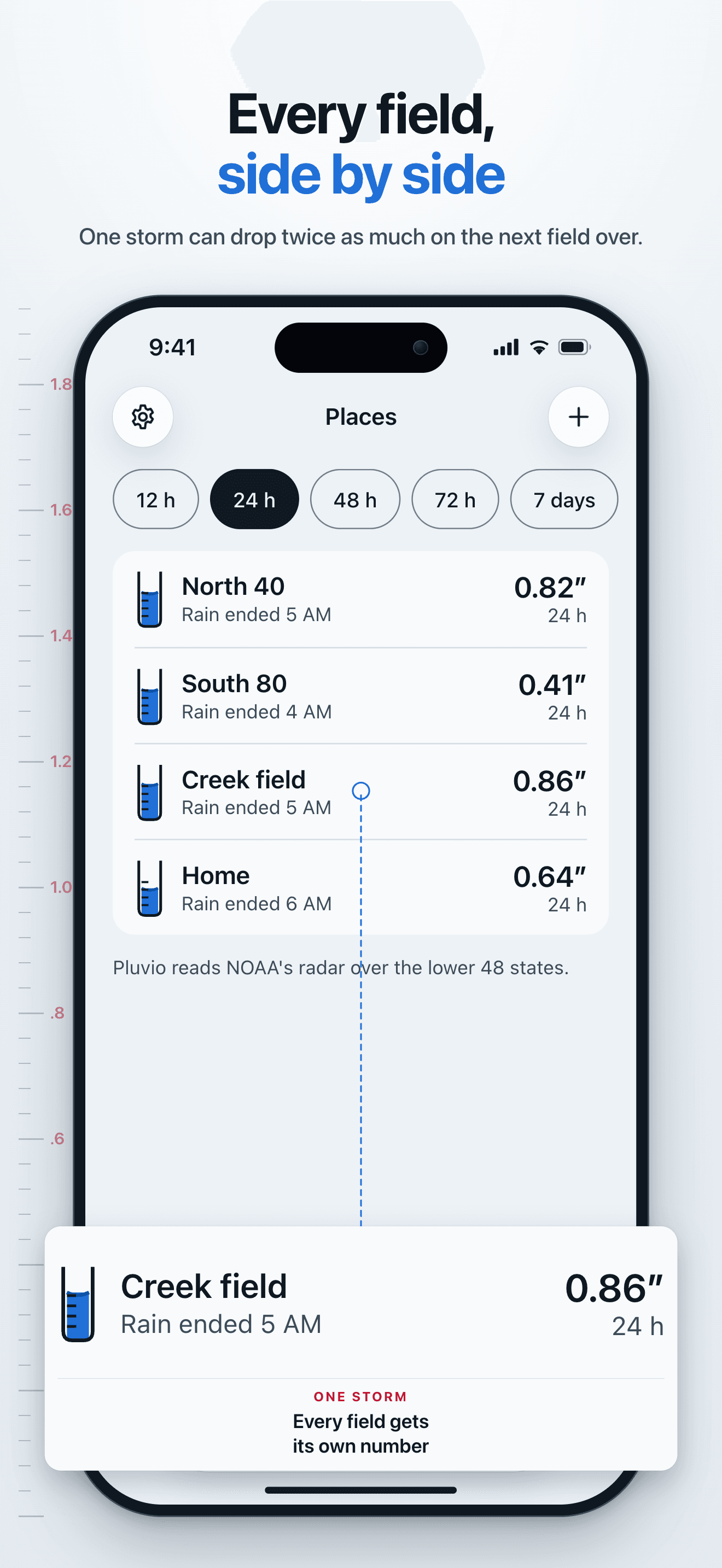
Rain for Each Place
Use your location, search an address, or drop a pin on a field. Readings are estimated from radar and rain gauges, anywhere in the lower 48 states.
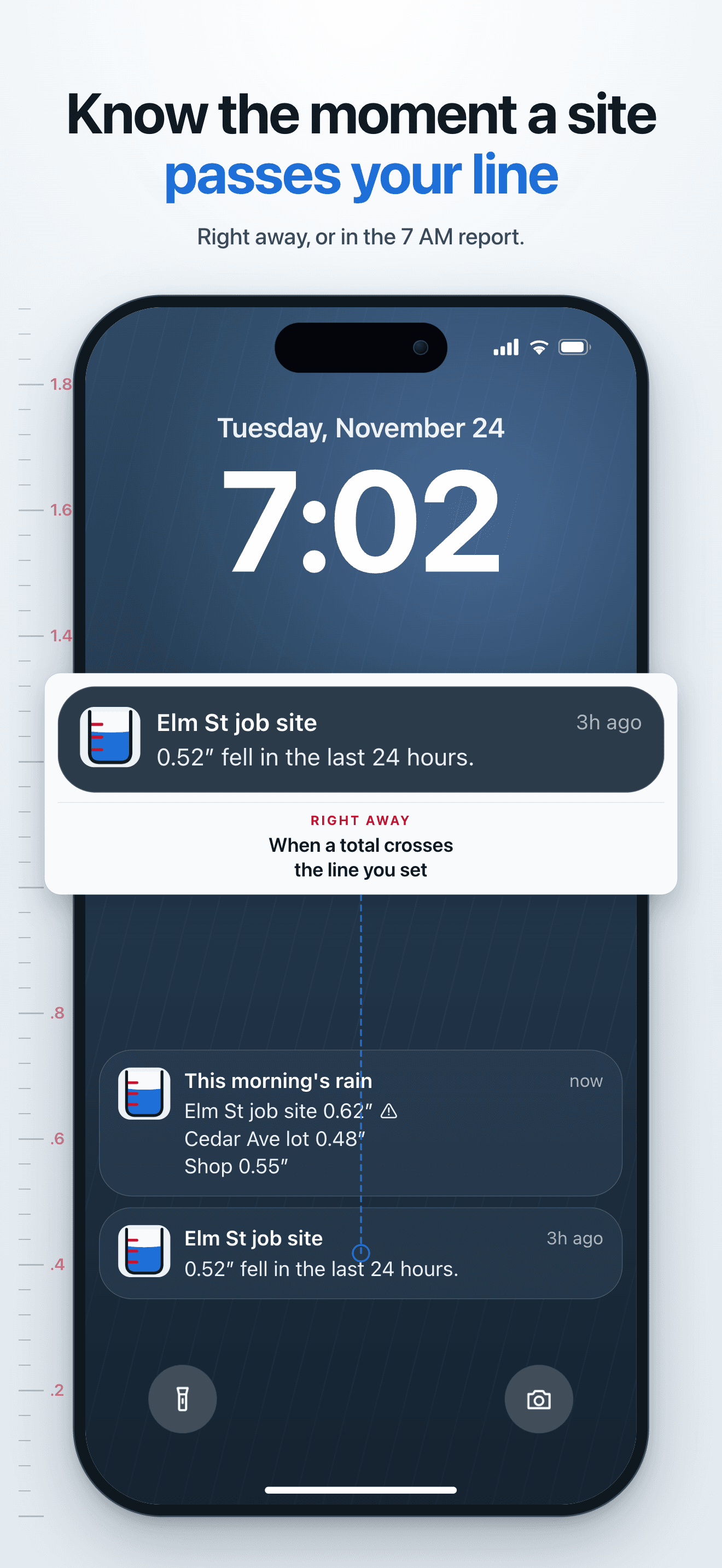
The 7 AM Report and Rain Alerts
Every morning, one message lists how much fell at each place. Set a line, like an inch in 24 hours, and hear about it right away or in the report. Alerts use measured totals, never forecasts.
History and Your Own Gauge
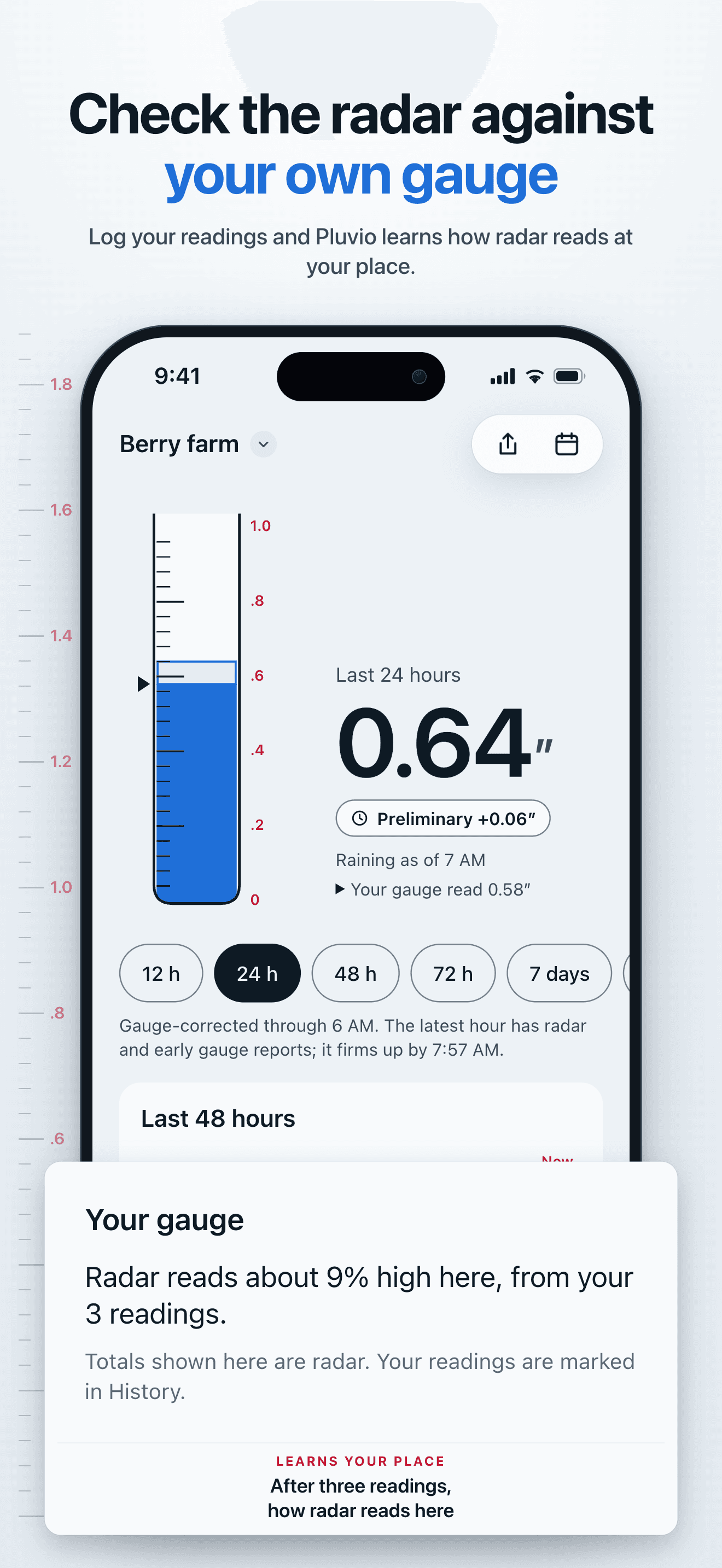
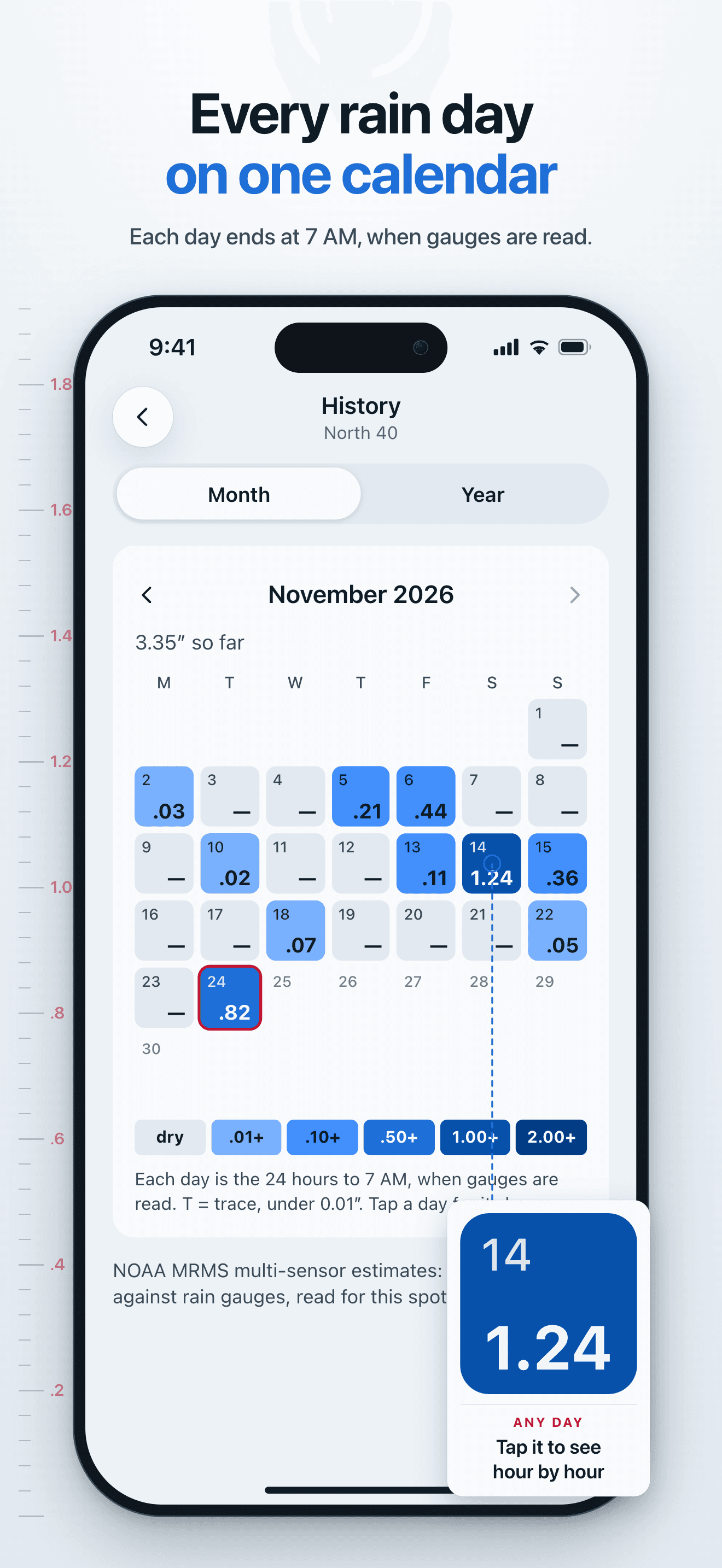
A calendar of daily totals, with any day hour by hour. Log your own gauge next to the radar's number, and after three readings see how the two compare.
No Account
Nothing to sign up for, and location is optional.
Plans
Pluvio Pro Monthly
Up to 20 places · full history · more alerts
Pluvio Pro Yearly
Up to 20 places · full history · more alerts
FAQ
What is Pluvio?
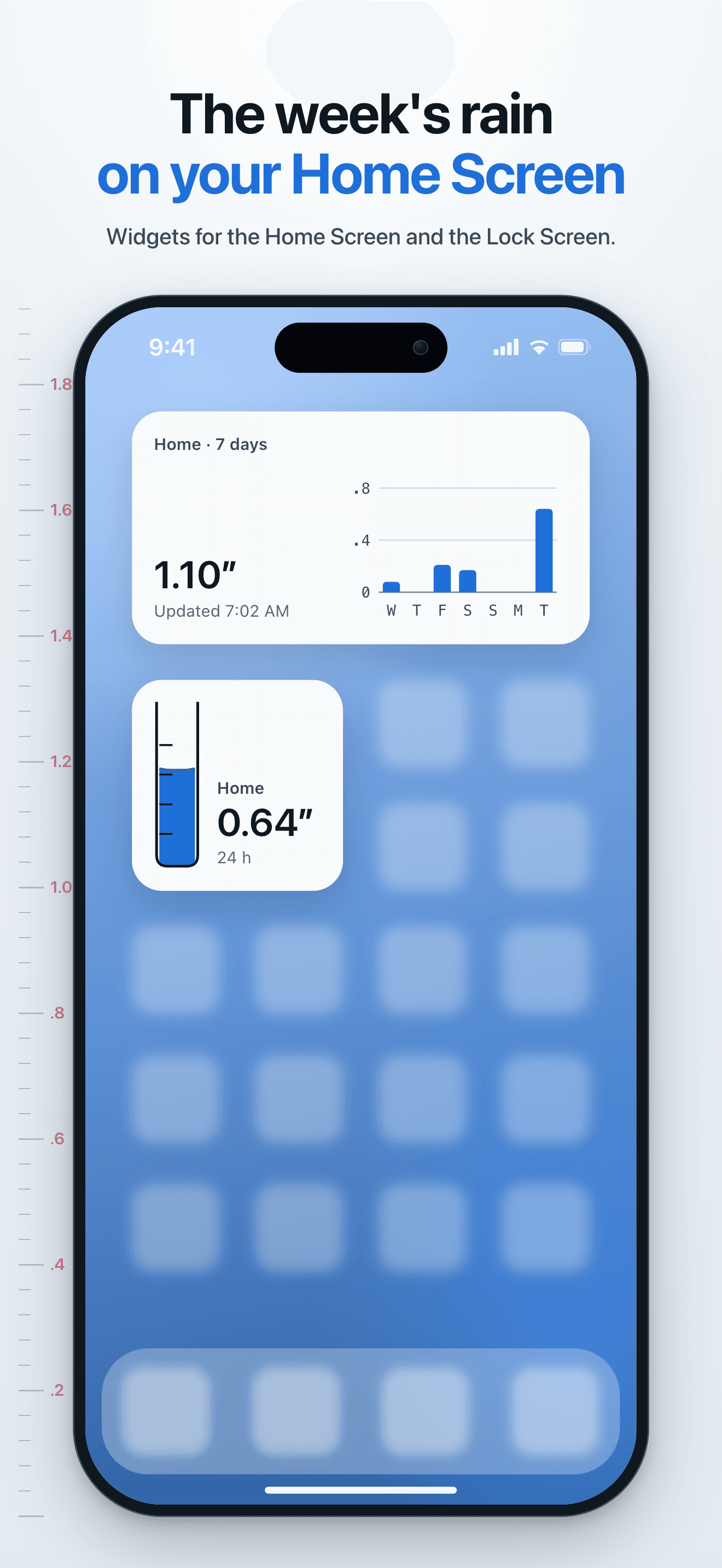
Pluvio is a virtual rain gauge for the lower 48 states. Save the places you care about — a field, a job site, your yard — and Pluvio shows how much rain fell at each: the last 24 hours, hour by hour for the last two days, this week, and a calendar of daily totals. A message at 7 AM lists what fell at each place, an alert tells you when a place crosses a line you set, and widgets show it on your Home Screen and Lock Screen.
Where do the numbers come from, and how accurate are they?
From NOAA's Multi-Radar/Multi-Sensor System (MRMS), which combines the national radar network with rain gauge reports and updates every hour. Each number is an estimate for an area about a square kilometer around your place. The newest hours are preliminary and stay marked until NOAA's gauge-corrected values replace them. Pluvio is not an official measurement.
Why doesn't Pluvio match my rain gauge?
A gauge measures one spot a few inches wide, while the radar estimate is an average over about a square kilometer, so a downpour that hit half of that square shows up diluted, and light rain can evaporate before it reaches the ground. Record your readings in the gauge log: after three readings on rainy days, Pluvio tells you whether radar usually runs high or low at that place.
When does a rain day end?
At 7 AM local time, when many people read their gauges, so Pluvio's daily totals line up with a gauge emptied each morning.
Where does Pluvio work?
Anywhere in the contiguous United States that NOAA's radar covers. You can look up any address or field there from wherever you are. Alaska and Hawaii are not covered.
What is free, and what does Pluvio Pro add?
Reading the rain, the gauge log, the 7 AM report, one alert and every widget are free for good, for two places and the last 30 days. Pro adds up to 20 places, every day in Pluvio's archive, an alert on every place, and the rain year and custom ranges.
Which plans are there? Is there a free trial?
Pluvio Pro is yearly, with a 7-day free trial for new subscribers, or monthly. Both unlock the same features. Billing is handled by Apple; you can cancel in Settings → your Apple ID → Subscriptions, and restore a purchase from the Pro screen.
Do I need an account? What does Pluvio keep about me?
There is no account. To read the rain and send your alerts, Pluvio's server keeps each place you save — where it is and the name you gave it — along with your alerts, time zone and units. Settings → Privacy → Delete my data removes them from the server and from your iPhone; deleting the app alone does not remove them from the server. The privacy policy has the details.
Can Pluvio warn me about floods or storms?
No. Pluvio reports rain that has already fallen — its alerts use measured totals, never forecasts — and it is not a warning service. For floods and severe weather, follow the National Weather Service and your local authorities.
Can I see millimeters instead of inches?
Yes. Units follow your region by default, and you can choose inches or millimeters in Settings → Units. Every chart can also show its numbers as a table.